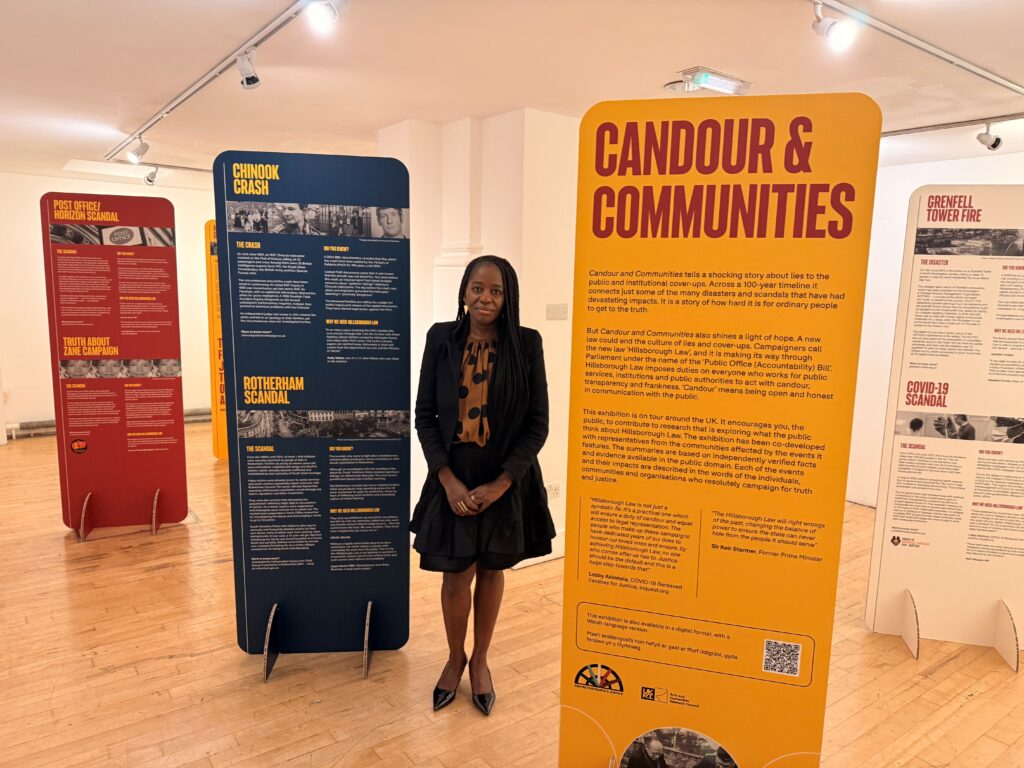
IPA hosts panel event alongside Candour and Communities exhibition
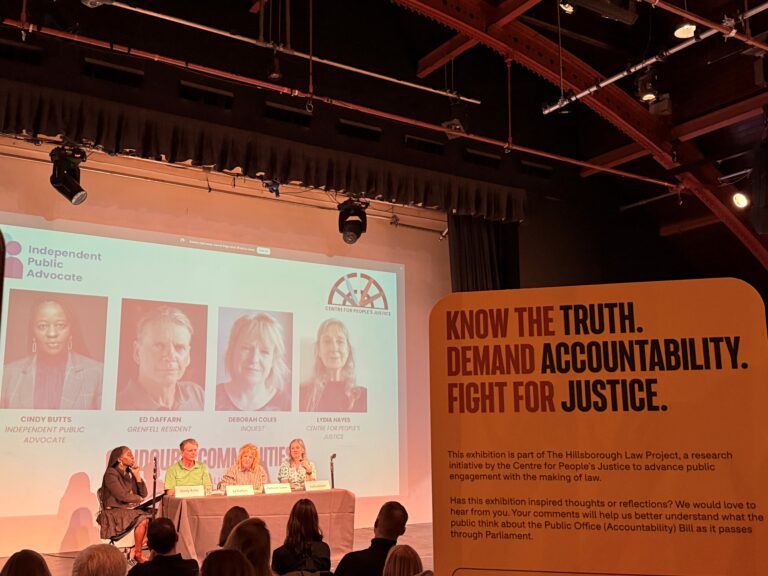
The Office of the Independent Public Advocate hosted its first event, bringing together bereaved families, survivors, campaigners, justice leaders and community members for a discussion alongside the Candour and Communities exhibition, presented in London for the first time.
The event created a space for people from different communities and campaigns to come together and reflect on shared experiences of seeking truth, accountability and change following major incidents.
Among those represented were people affected by the Chinook crash, the Grenfell Tower fire, the Post Office scandal, the COVID-19 pandemic, Southport, Orgreave, the Summerland fire and the London Bridge attacks. While these events span decades and differ in many respects, many of those affected continue to face similar challenges in their search for answers, accountability, support and lasting change.
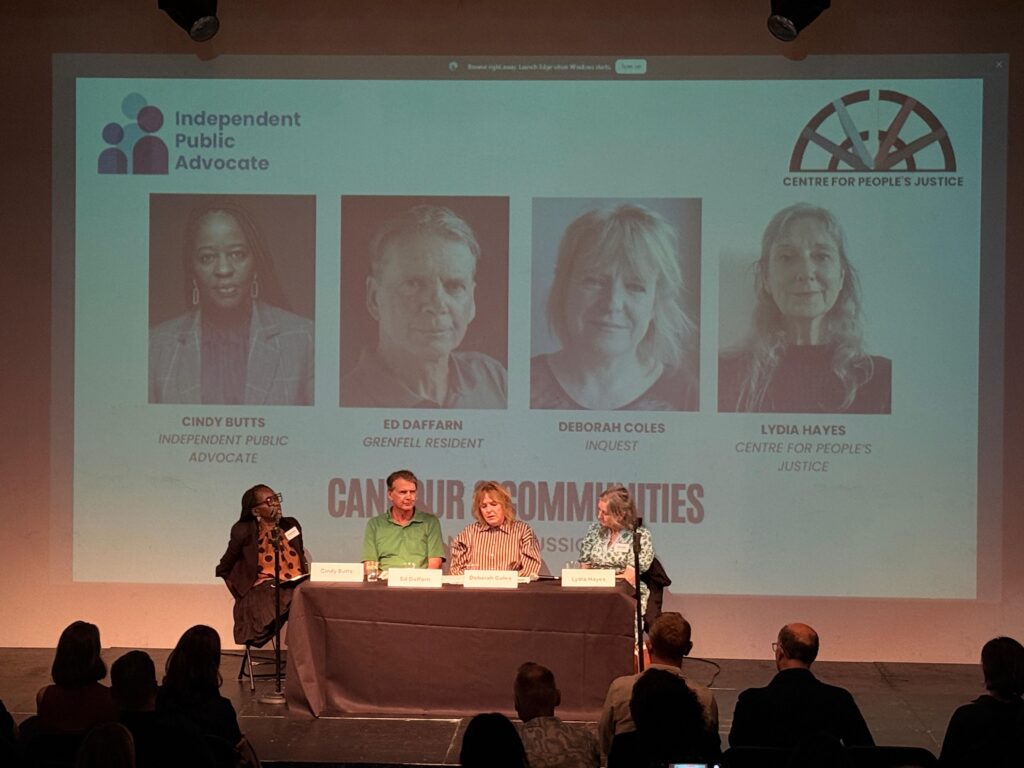
The Independent Public Advocate, Cindy Butts, chaired a panel discussion featuring Ed Daffarn (Grenfell United), Deborah Coles (INQUEST) and Lydia Hayes (Centre for People’s Justice).
The discussion explored the lasting impact on victims, survivors and communities when candour is absent from public institutions, the barriers to embedding a meaningful Duty of Candour, and why cultural change will be essential if reform is to have a lasting impact. Panellists and audience members also reflected on the importance of ensuring that lessons are not only identified in inquiries and inquests, but are implemented.
The conversation was honest and personal. Throughout the evening, people shared experiences of navigating complex investigations and justice processes, often over many years, and highlighted the profound impact that delays, defensiveness and a lack of transparency can have on those seeking the truth.
Duty of Candour: Key Themes Emerging from the Discussion
The event took place as the Public Office (Accountability) Bill, commonly known as the Hillsborough Law, continues its passage through Parliament. If enacted, the Bill would place a statutory Duty of Candour on public authorities during investigations, inquests and inquiries, requiring them to act openly, honestly and in the public interest.
While there was broad support for the principle of a Duty of Candour, discussion throughout the evening reinforced a clear message: legislation alone will not deliver the change that bereaved families, survivors and campaigners have long called for.
Three themes emerged from the discussion:
Implementation requires commitment
Passing legislation is only the first step. For a Duty of Candour to deliver meaningful change, public bodies will need clear guidance, training, leadership and accountability. Embedding openness and transparency into day-to-day decision-making will require sustained commitment across institutions.
Culture change will be key
The greatest challenge will be changing organisational cultures. A Duty of Candour cannot succeed if institutions remain defensive, resistant to scrutiny or focused on protecting reputations. Lasting reform requires a culture that values transparency, accountability and learning from mistakes. Strong and effective leadership is vital to enable this change.
Lessons must lead to action
There is a need for greater oversight of the recommendations made by inquiries, inquests and other investigations. Too often, recommendations intended to prevent future deaths and harm are not fully implemented, despite the significant emotional, financial and public resources invested in these processes. An effective oversight mechanism would help ensure that recommendations lead to meaningful action and reduce the risk of preventable harm in the future.
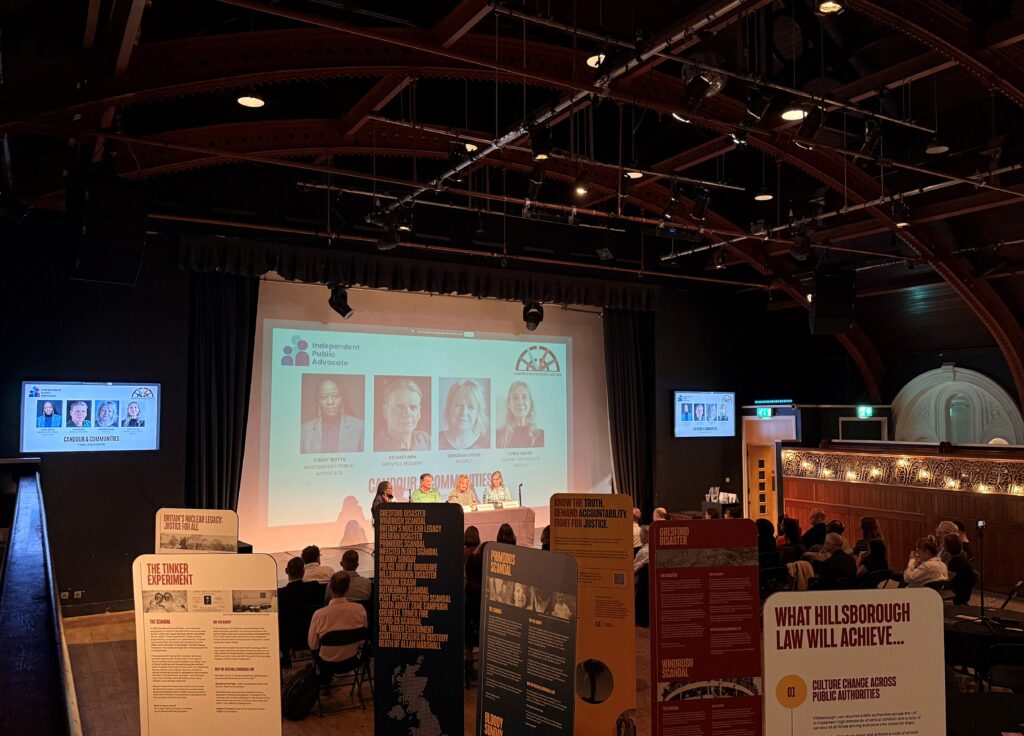
Continuing the Conversation
We are grateful to everyone who attended and contributed to the discussion, both during the panel and in the conversations that continued afterwards.
What was clear throughout the evening was the determination of so many people to ensure that the lessons of past tragedies are not forgotten and that future families do not have to fight the same battles for truth and accountability.
As the debate around candour and accountability continues, these conversations will remain vitally important. The Office of the Independent Public Advocate is committed to listening to victims, survivors, bereaved families and campaigners, and to ensuring that their experiences continue to inform our work.